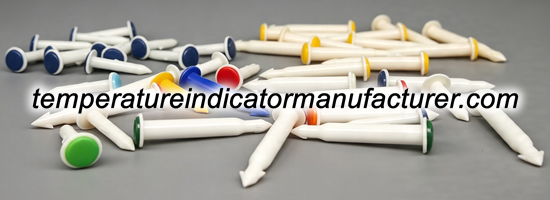
Disposable Temperature Indicators for Ready-to-Cook Poultry: Product and Packaging Considerations
Disposable Temperature Indicators for Ready-to-Cook Poultry: Product and Packaging Considerations
Ready-to-cook poultry products occupy an important position between food manufacturing and the final consumer. For manufacturers, the product must work within a controlled production process, while the finished package also needs to provide a clear and practical cooking experience.
A disposable temperature indicator can be incorporated into certain ready-to-cook poultry applications as a simple visual temperature indication device. For food brands and processors considering this type of product, however, the indicator should be selected as part of the overall product and packaging design rather than as an isolated accessory.
This article looks at the main considerations when selecting disposable temperature indicators for ready-to-cook poultry products.
What Are Ready-to-Cook Poultry Products?
Ready-to-cook poultry products are prepared food products designed to require cooking by the end user before consumption. They can include turkey, chicken, and other poultry-based products supplied through retail, food service, or other commercial channels.
Because these products are designed around a defined preparation process, manufacturers may choose to include a temperature indication device that corresponds with the intended cooking application.
Why Temperature Indication Can Be Part of the Product Design
For a food manufacturer, a temperature indicator can be more than a standalone kitchen accessory. When supplied together with a poultry product, it can become part of the overall product experience.
The main advantages of a disposable design include:
- Simple visual indication
- Single-use operation
- No battery requirement
- No electronic display
- Easy integration into suitable food applications
Whether an indicator is appropriate depends on the individual product, cooking instructions, packaging design, and the manufacturer's requirements.
Choosing the Right Activation Temperature
Activation temperature is one of the first specifications that should be established when developing a ready-to-cook poultry product.
Different products can have different requirements. A whole turkey, a chicken product, and a prepared poultry meal may not use the same temperature specification.
For this reason, food manufacturers should identify the intended application first and then select an indicator with a suitable activation temperature.
Product Size and Placement
The physical dimensions of the indicator should also be considered during product development.
The available space within the food product, the desired insertion location, and the surrounding packaging can all influence which indicator size is appropriate.
A product development team should therefore evaluate the indicator together with the actual poultry product rather than selecting the device solely from a product catalog.
Packaging Is Part of the Solution
Ready-to-cook poultry products are frequently sold in packaging designed for retail presentation. This means the temperature indicator may need to fit both the food application and the finished package.
Depending on the commercial program, manufacturers may consider:
- Bulk packaging for production use
- Clear self-seal bag packaging
- Blister card packaging
- Custom retail packaging
- Private-label packaging
Packaging requirements should be established early because they can affect purchasing quantities, product presentation, and production procedures.
OEM Options for Ready-to-Cook Poultry Brands
Retail poultry products are often sold under national brands, regional brands, or supermarket private labels. OEM manufacturing allows the temperature indicator to be adapted to the requirements of the food brand.
Potential customization options include:
- Activation temperature
- Button head color
- Product dimensions
- Logo injection molding
- Custom blister cards
- Custom self-seal bags
The exact options depend on the manufacturer's production capabilities and the requirements of the project.
Material Considerations for Food Applications
When a temperature indicator is intended for use with food products, buyers should review its material construction as part of the supplier qualification process.
Professional disposable indicators can use food-grade PA66 nylon for the housing and core, BPA-free components, food-extracted temperature sensing wax, and a metal spring mechanism.
The customer's quality and regulatory teams should evaluate the complete product specification according to the intended market and application.
Accuracy and Consistent Activation
A ready-to-cook poultry brand needs more than a visually appealing indicator. The product must also perform consistently according to its agreed specification.
Activation accuracy can be specified for professional products, with some configurations reaching approximately ±2°F. The actual specification should be confirmed for the selected model and application.
For recurring production, consistency between batches is especially important because the same product may be incorporated into thousands or millions of food packages over time.
Bulk Supply for Food Manufacturers
Ready-to-cook poultry manufacturers generally purchase components according to production schedules rather than individual consumer demand.
This makes supply capability an important part of supplier selection. Buyers should consider:
- Monthly production capacity
- Minimum order quantity
- Lead time
- Repeat-order consistency
- Packaging requirements
- OEM capability
A supplier that understands recurring industrial purchasing can provide a more suitable foundation for long-term product programs.
Why Direct Manufacturer Communication Helps
When an indicator is being incorporated into a food product, technical questions may arise during development. These can involve activation temperature, dimensions, packaging, color, or production quantities.
Direct communication with the manufacturer can make these discussions more efficient and reduce the distance between the customer's product requirements and the actual production process.
This can be particularly useful when a food company is launching a new ready-to-cook poultry product or developing a private-label program for a retailer.
From Product Development to Long-Term Supply
The initial sample is only one stage of an OEM project. Once a poultry product reaches regular production, the temperature indicator becomes part of the recurring supply chain.
For this reason, procurement teams should evaluate the supplier from a long-term perspective. Manufacturing experience, production specialization, quality control, communication, and capacity should all be considered before establishing a recurring supply program.
A Practical Checklist for Poultry Product Developers
Before approving a disposable temperature indicator for a ready-to-cook poultry product, the development and purchasing teams can review the following points:
- What is the intended poultry application?
- What activation temperature is required?
- What level of accuracy is expected?
- What indicator size is appropriate?
- Where will the indicator be positioned?
- What packaging format is required?
- Is private-label branding needed?
- What quantity will be required per production cycle?
- Can the supplier support recurring bulk orders?
Answering these questions before production helps prevent the temperature indicator from becoming an afterthought in the product development process.
Frequently Asked Questions
Can disposable temperature indicators be used with ready-to-cook poultry?
Yes. They can be used in suitable turkey, chicken, and other poultry applications where a disposable visual temperature indication solution is appropriate.
Can a poultry company customize the activation temperature?
Yes. Professional manufacturers can offer different activation temperatures and customized specifications according to the application.
Can temperature indicators be included in retail poultry packaging?
Yes. Depending on the product design, indicators can be supplied in packaging formats suitable for retail and private-label programs.
Can ready-to-cook poultry brands use private-label packaging?
Yes. OEM programs can support customized packaging such as blister cards, clear self-seal bags, and other customer-specific formats.
What should a food manufacturer consider before selecting an indicator?
The main considerations include activation temperature, accuracy, size, materials, placement, packaging, order quantity, and supplier capability.
Are disposable temperature indicators suitable for bulk production?
Yes. Bulk production is commonly used for commercial poultry, meat, and other food manufacturing applications.
Why is supplier experience important?
An experienced specialized manufacturer can provide more direct technical communication and better support for recurring production and OEM requirements.
DISCLAIMER
"Pop-up timer" is a commonly used descriptive industry term for a type of disposable cooking temperature indicator. It may refer to the functional design or operating principle of such products and does not by itself identify a specific manufacturer or brand.
PopNReady™ is an independent OEM brand of disposable cooking temperature indicators manufactured by LIOU Manufacturing . We are an independent factory-direct manufacturer and are not affiliated with any other brand or manufacturer unless expressly stated.