Food Temperature Indicator Supplier: What Procurement Teams Should Check Before Placing a Bulk Order
Food Temperature Indicator Supplier: What Procurement Teams Should Check Before Placing a Bulk Order
For a food manufacturer, choosing a temperature indicator supplier is not simply a matter of finding the lowest unit price. Once a product becomes part of a regular production program, supplier reliability, specification consistency, production capacity, packaging, and communication can become just as important as the initial quotation.
This is particularly true for disposable food temperature indicators. They are often purchased in bulk and may be incorporated into poultry, meat, prepared food, or retail-ready products. A specification that appears simple on paper can therefore become an important part of a recurring supply chain.
For procurement teams, a structured supplier evaluation can reduce avoidable problems and make it easier to establish a reliable long-term source.
Start with the Product Specification
Before comparing suppliers, buyers should define what they actually need. Different disposable temperature indicators can have different activation temperatures, dimensions, materials, and packaging formats.
A basic purchasing specification may include:
- Activation temperature
- Activation accuracy
- Product size
- Materials
- Application
- Packaging format
- Required quantity
Having these details available makes supplier quotations easier to compare because each manufacturer is responding to the same basic requirements.
Check Whether the Supplier Is a Manufacturer or a Reseller
The supply chain behind a product matters. A trading company may be suitable for some purchasing programs, but buyers looking for OEM production or long-term bulk supply may prefer to work directly with a specialized manufacturer.
A direct manufacturer can normally provide more detailed information about production, customization, materials, and manufacturing capacity.
For customized projects, this direct communication can be especially useful because technical questions can be discussed with the source responsible for production rather than passed through several intermediaries.
Look for Product Specialization
A supplier that sells many unrelated products may not have the same depth of experience as a manufacturer focused on one specific product category.
For temperature indicators, specialization can involve knowledge of activation mechanisms, sensing materials, assembly, product dimensions, quality control, and application requirements.
Procurement teams should therefore ask how long the supplier has been manufacturing the specific product rather than relying only on the age of the trading company.
Evaluate Activation Temperature Options
Activation temperature is one of the most important technical specifications of a disposable temperature indicator.
Food companies may require different activation temperatures depending on their products and applications. A suitable supplier should be able to explain its available temperature options clearly and identify which specifications can be customized.
For OEM programs, buyers should establish the required activation temperature before approving the final production specification.
Ask About Accuracy and Batch Consistency
A quoted accuracy figure is useful, but industrial buyers should also consider consistency between production batches.
When thousands of indicators are used in a recurring food production program, predictable performance is more important than the performance of a single sample.
Professional disposable temperature indicators can be manufactured to controlled activation specifications, with some configurations achieving approximately ±2°F according to the agreed product specification.
Buyers should confirm the applicable specification for the exact model being purchased rather than assuming that every product has identical performance.
Review Material Information
Material transparency is particularly important for products associated with food applications.
A supplier should be able to provide clear information about the materials used in the indicator and the relevant product documentation required by the buyer.
Depending on the model, construction can include food-grade PA66 nylon for the housing and core, BPA-free components, food-extracted temperature sensing wax, and a metal spring mechanism.
The buyer's own quality and regulatory teams should determine whether the complete specification satisfies the requirements of the intended market and application.
Check Bulk Production Capacity
A supplier may be able to produce a small sample order without necessarily being suitable for a recurring industrial program.
For bulk buyers, production capacity should therefore be discussed before a supply agreement is established.
Relevant questions include:
- What is the normal production capacity?
- What order quantities can be supported?
- How are repeat orders scheduled?
- What happens when demand increases?
- Can the supplier maintain the same specification across production batches?
The answers can help procurement teams distinguish between a sample-capable supplier and a manufacturer capable of supporting a long-term B2B program.
Understand MOQ and Lead Time
Minimum order quantity and lead time should be established early in the purchasing process.
For standard products, production may be relatively straightforward. Customized products and OEM packaging can require additional preparation and therefore different production schedules.
Buyers should confirm the expected lead time for both the first order and subsequent repeat orders.
Evaluate OEM and Customization Capability
Food companies frequently require more than an off-the-shelf product. Private-label programs and retail food products may require customized presentation or specifications.
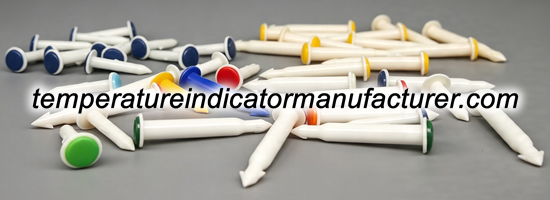
Potential OEM options can include:
- Custom activation temperature
- Button head color
- Product dimensions
- Logo injection molding
- Blister card packaging
- Clear self-seal bag packaging
- Bulk packaging
The exact options depend on the manufacturer's production capabilities and the project requirements.
Consider Packaging and Logistics Together
Packaging affects more than product appearance. For bulk international orders, packaging can influence carton volume, handling, storage, and transportation.
Industrial customers may prefer bulk packaging because it is efficient for production use, while retail programs may require individually presented packaging.
A supplier should therefore be able to discuss packaging as part of the complete supply solution rather than treating it as an unrelated service.
Ask About Export Experience
International B2B purchasing involves more than manufacturing. Export documentation, communication, packaging specifications, shipping coordination, and repeat-order management can all become part of the supplier relationship.
For an overseas buyer, experience supplying international customers can therefore be an important qualification factor.
This is particularly relevant when the temperature indicator is a recurring component in a food company's supply chain.
Samples Are Useful, but They Are Not the Whole Evaluation
Samples allow buyers to examine physical dimensions, appearance, packaging, and general product suitability.
However, a successful sample does not automatically prove that a supplier is suitable for long-term production.
Procurement teams should evaluate the manufacturer's production capability, documentation, quality procedures, communication, and ability to maintain the agreed specification over repeated orders.
Direct Factory Supply for Long-Term B2B Programs
For companies purchasing disposable temperature indicators regularly, direct factory cooperation can simplify communication and reduce unnecessary layers in the supply chain.
The buyer can discuss product specifications, production quantities, OEM requirements, packaging, and future changes directly with the manufacturing source.
This structure is particularly suitable for food processors, poultry companies, private-label brands, distributors, and other customers purchasing at commercial volumes.
A Practical Supplier Qualification Checklist
Before approving a disposable food temperature indicator supplier, procurement teams can use the following checklist:
- Is the company the actual manufacturer?
- How long has it specialized in the product?
- What activation temperatures are available?
- What accuracy can be specified?
- What materials are used?
- What production capacity is available?
- What are the MOQ and lead time?
- Can OEM products be manufactured?
- What packaging formats are available?
- Does the supplier have international export experience?
- Can the supplier support recurring bulk orders?
A supplier that can answer these questions clearly gives a procurement team a much stronger basis for making a long-term sourcing decision.
Frequently Asked Questions
How do I choose a food temperature indicator supplier?
Start by defining the required temperature, accuracy, dimensions, materials, packaging, quantity, and application. Then evaluate the supplier's manufacturing experience, production capacity, OEM capability, and supply reliability.
Should I buy directly from a manufacturer?
Direct manufacturer supply can be advantageous for bulk and OEM purchasing because technical requirements and production details can be discussed directly with the manufacturing source.
What should I ask a disposable temperature indicator manufacturer?
Ask about activation temperature, accuracy, materials, production capacity, MOQ, lead time, customization, packaging, quality procedures, and export experience.
Can disposable temperature indicators be customized?
Yes. Depending on the manufacturer, customization may include activation temperature, color, dimensions, logo, and packaging.
What accuracy can disposable temperature indicators provide?
Accuracy depends on the specific model and agreed specification. Some professionally manufactured configurations can achieve approximately ±2°F.
Can suppliers provide bulk disposable temperature indicators?
Yes. Bulk production is a common purchasing model for food processors, poultry companies, distributors, private-label brands, and other B2B customers.
Why is production consistency important?
Recurring food production programs may use large quantities of the same indicator. Consistent specifications between batches help support a stable purchasing and production process.
Does packaging need to be customized?
Not always. Industrial customers may use bulk packaging, while retail and private-label programs may require customized packaging such as blister cards or clear self-seal bags.
DISCLAIMER
"Pop-up timer" is a commonly used descriptive industry term for a type of disposable cooking temperature indicator. It may refer to the functional design or operating principle of such products and does not by itself identify a specific manufacturer or brand.
PopNReady™ is an independent OEM brand of disposable cooking temperature indicators manufactured by LIOU Manufacturing . We are an independent factory-direct manufacturer and are not affiliated with any other brand or manufacturer unless expressly stated.