Disposable Temperature Indicator vs Traditional Thermometer: Choosing the Right Solution for Food Processing
Disposable Temperature Indicator vs Traditional Thermometer: Choosing the Right Solution for Food Processing
Temperature control is one of the most important parts of modern food production. Poultry processors, meat manufacturers, frozen food companies, and commercial kitchens all require reliable methods to confirm temperature conditions during cooking and processing.
While traditional thermometers have been widely used for many years, disposable temperature indicators provide a different approach that is especially suitable for large-scale food production environments.
Understanding the difference between these solutions helps businesses choose the right temperature management method for their applications.
What Is a Disposable Temperature Indicator?
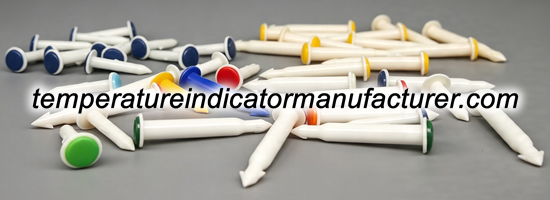
A disposable temperature indicator is a single-use temperature indication product designed to provide a visual response when a specific temperature point is reached.
Unlike reusable measuring devices, disposable indicators are designed for individual product use and can become part of the food production workflow.
Common applications include:
- Poultry processing
- Turkey production
- Meat roasting
- Frozen food preparation
- Commercial food manufacturing
What Is a Traditional Thermometer?
Traditional thermometers are reusable instruments designed to measure temperature values.
They are commonly used for:
- Manual temperature checking
- Quality inspection
- Laboratory testing
- Kitchen monitoring
For some applications, reusable thermometers remain an effective solution. However, large-scale production environments may require different considerations.
Key Differences Between Disposable Indicators and Thermometers
1. Single Product Use vs Reusable Measurement
The biggest difference is the usage method.
Disposable temperature indicators are attached or inserted into individual products, providing product-level temperature indication.
Traditional thermometers usually require manual measurement by operators.
2. Production Efficiency
In industrial food processing, efficiency is critical.
Disposable temperature indicators can support production workflows by reducing repeated manual checking steps and allowing visual confirmation during processing.
3. Application in High-Volume Production
Large poultry and meat processors handle thousands of products daily.
For these environments, a disposable temperature indicator can provide:
- Simple operation
- Consistent product placement
- Reduced handling requirements
- Production-friendly usage
Why Food Manufacturers Use Single Use Temperature Indicators
Food manufacturers often select single use temperature indicators because they are designed for specific production needs.
Advantages include:
- No battery requirements
- No calibration management during use
- Easy visual confirmation
- Suitable for bulk production
- Compatible with packaging processes
Material Considerations for Food Applications
Both food safety and product consistency depend on proper material selection.
Professional disposable temperature indicators are manufactured using controlled materials such as:
- Food-grade PA66 nylon housing and core
- BPA-free components
- Food-extracted temperature sensing wax
- Metal spring mechanism
Applications Where Disposable Indicators Have Advantages
Disposable indicators are especially suitable for businesses requiring repeatable temperature indication across large quantities of products.
Typical applications include:
- Turkey roasting operations
- Poultry processing plants
- Meat packaging facilities
- Ready meal production
- Food service supply chains
Choosing Between a Thermometer and Temperature Indicator
The right choice depends on the application.
Businesses should consider:
- Production volume
- Need for individual product indication
- Workflow requirements
- Cost management
- Packaging method
Why Manufacturers Need Professional Suppliers
For companies purchasing disposable temperature indicators in bulk, supplier experience is important.
A professional manufacturer should provide:
- Stable production quality
- Consistent activation accuracy
- OEM customization
- Export experience
- Long-term supply capability
Frequently Asked Questions
What is the difference between a thermometer and a temperature indicator?
A thermometer measures temperature values, while a temperature indicator provides a visible response when a specific temperature point is reached.
Are disposable temperature indicators suitable for food production?
Yes. They are widely used in poultry, meat, and commercial food processing applications.
Why use a single use food temperature indicator?
Single-use indicators provide simple product-level temperature confirmation for large-scale operations.
Can disposable indicators replace all thermometers?
No. Different applications require different temperature management solutions.
What industries use disposable cooking thermometers?
Food processors, poultry companies, meat manufacturers, and commercial food suppliers commonly use them.
Can disposable temperature indicators be customized?
Yes. Manufacturers can customize activation temperature, colors, logos, and packaging.
Why are disposable indicators useful for poultry processing?
They provide simple and consistent temperature indication for high-volume poultry production.
What should buyers consider when selecting a supplier?
Buyers should evaluate manufacturing experience, quality control, customization ability, and export capability.
DISCLAIMER: "Disposable Temperature Indicator", "Disposable Cooking Thermometer", and "Pop-Up Timer" are generic industry terms used to describe temperature indication products. LIOU Manufacturing & PopNReady is an independent Chinese direct-source manufacturer specializing in disposable temperature indicators and pop-up timers since 2006. We are not affiliated with VOLK or any other brand, manufacturer, company, or trademark owner. Any product terminology or comparison references are provided only for industry identification purposes.