Disposable Temperature Indicator vs Electronic Thermometer: Choosing the Right Solution for Food Production
Disposable Temperature Indicator vs Electronic Thermometer: Choosing the Right Solution for Food Production
Temperature control is essential in modern food production. Whether manufacturing poultry products, meat items, frozen foods, or ready-to-cook meals, companies need reliable ways to confirm that production temperatures meet their requirements.
When selecting a temperature monitoring solution, many businesses compare disposable temperature indicators with electronic thermometers.
Both solutions have their own advantages. The right choice depends on the production environment, application requirements, operating procedures, and purchasing objectives.
Understanding the Difference Between Two Temperature Solutions
Disposable temperature indicators and electronic thermometers serve different purposes.
An electronic thermometer is designed to measure and display temperature values repeatedly. It is commonly used for testing, inspection, and quality control procedures.
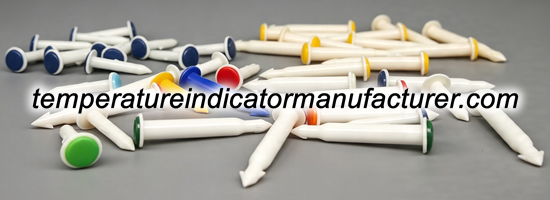
A disposable temperature indicator is designed to provide a simple visual indication when a specific temperature point has been reached. It is often integrated directly into food products or production processes.
Why Food Manufacturers Use Disposable Temperature Indicators
Commercial food production often involves thousands of products moving through standardized processes.
In these environments, manufacturers need solutions that are:
- Simple to apply
- Easy to identify visually
- Suitable for high-volume production
- Consistent across large quantities
- Easy to integrate into workflows
Disposable temperature indicators are especially valuable when companies need temperature confirmation on individual products rather than occasional measurement.
Advantages of Disposable Temperature Indicators
1. Designed for High-Volume Applications
Food processors may produce thousands or millions of products each year. A single-use temperature indicator can be supplied in bulk quantities and used directly during production.
This makes it suitable for:
- Poultry processing
- Turkey products
- Meat production
- Frozen food manufacturing
- Ready meal production
2. No Battery or Electronic Maintenance
Unlike electronic devices, disposable indicators do not require batteries, calibration procedures, or electronic maintenance.
For many production environments, this reduces operational complexity and simplifies daily usage.
3. Easy Visual Confirmation
A major advantage of disposable temperature indicators is their simplicity.
Production workers and consumers can quickly identify whether the target temperature condition has been reached without additional equipment.
Advantages of Electronic Thermometers
Electronic thermometers remain valuable tools in many food operations.
They are commonly used when companies need:
- Exact temperature readings
- Repeated measurements
- Quality inspection procedures
- Laboratory-style testing
For professional testing environments, electronic instruments provide detailed temperature information.
When Should Companies Choose Disposable Temperature Indicators?
Disposable temperature indicators are often preferred when the goal is temperature confirmation rather than continuous measurement.
They are particularly suitable for:
- Large-scale food production
- Retail-ready products
- Consumer-facing food applications
- Industrial roasting processes
- Products requiring built-in temperature indication
Food Safety Applications and Temperature Control
Food safety requires consistent process control.
Disposable temperature indicators help manufacturers create visible temperature checkpoints during production.
They support applications where companies need confidence that products have reached the required cooking or processing condition.
Material and Manufacturing Quality Considerations
For food applications, product materials are an important consideration.
Professional disposable temperature indicators may use:
- Food-grade PA66 nylon housing and core
- BPA-free components
- Food-extracted sensing wax
- Reliable metal spring mechanism
Manufacturing quality directly affects activation consistency and product reliability.
Cost Considerations for Industrial Buyers
For companies purchasing thousands of units, total operating cost is an important factor.
Disposable solutions can provide advantages because they:
- Require no maintenance
- Reduce equipment management
- Support automated or standardized workflows
- Can be purchased in bulk quantities
The best solution depends on the specific production model and business requirements.
Choosing the Right Supplier Matters
Regardless of the product type selected, supplier capability remains important.
A professional disposable temperature indicator manufacturer should provide:
- Stable production capability
- OEM customization support
- Consistent product quality
- Food industry application knowledge
- International export experience
Frequently Asked Questions
Are disposable temperature indicators the same as thermometers?
No. Disposable indicators confirm a temperature point, while thermometers usually measure and display temperature values.
Which solution is better for food factories?
It depends on the application. Large-volume food production often benefits from simple disposable temperature indication solutions.
Can disposable indicators replace electronic thermometers?
They serve different purposes and are often used for different production requirements.
Why do poultry companies use disposable temperature indicators?
They provide simple temperature confirmation for large-scale poultry production processes.
Are disposable temperature indicators suitable for bulk production?
Yes. They are commonly supplied in bulk quantities for commercial food applications.
Can activation temperature be customized?
Yes. OEM manufacturers can provide customized activation temperature options.
What industries use single-use food temperature indicators?
They are used in poultry, meat, frozen food, ready meal, and food service industries.
How should buyers select a manufacturer?
Buyers should evaluate manufacturing experience, quality control, customization ability, and export capability.
DISCLAIMER: "Pop-Up Timer" and related terms are generic industry descriptions for disposable temperature indication products. LIOU Manufacturing & PopNReady is an independent Chinese direct-source manufacturer specializing in disposable pop-up timers and temperature indicators since 2006. We are not affiliated with VOLK or any other third-party brand. Any references are used only for product category identification and comparison purposes.